Neighbourhood Guide
What to know about Boyle Street.
Boyle Street — officially Wîhkwêntôwin, a name adopted to recognize the neighbourhood's deep Indigenous history — is one of Edmonton's oldest and most storied inner-city communities. Originally developed in the early 1900s as Norwood, it was later renamed for John Robert Boyle, a prominent Alberta lawyer and jurist, and has since carried its identity as one of the city's most complex and resilient neighbourhoods.
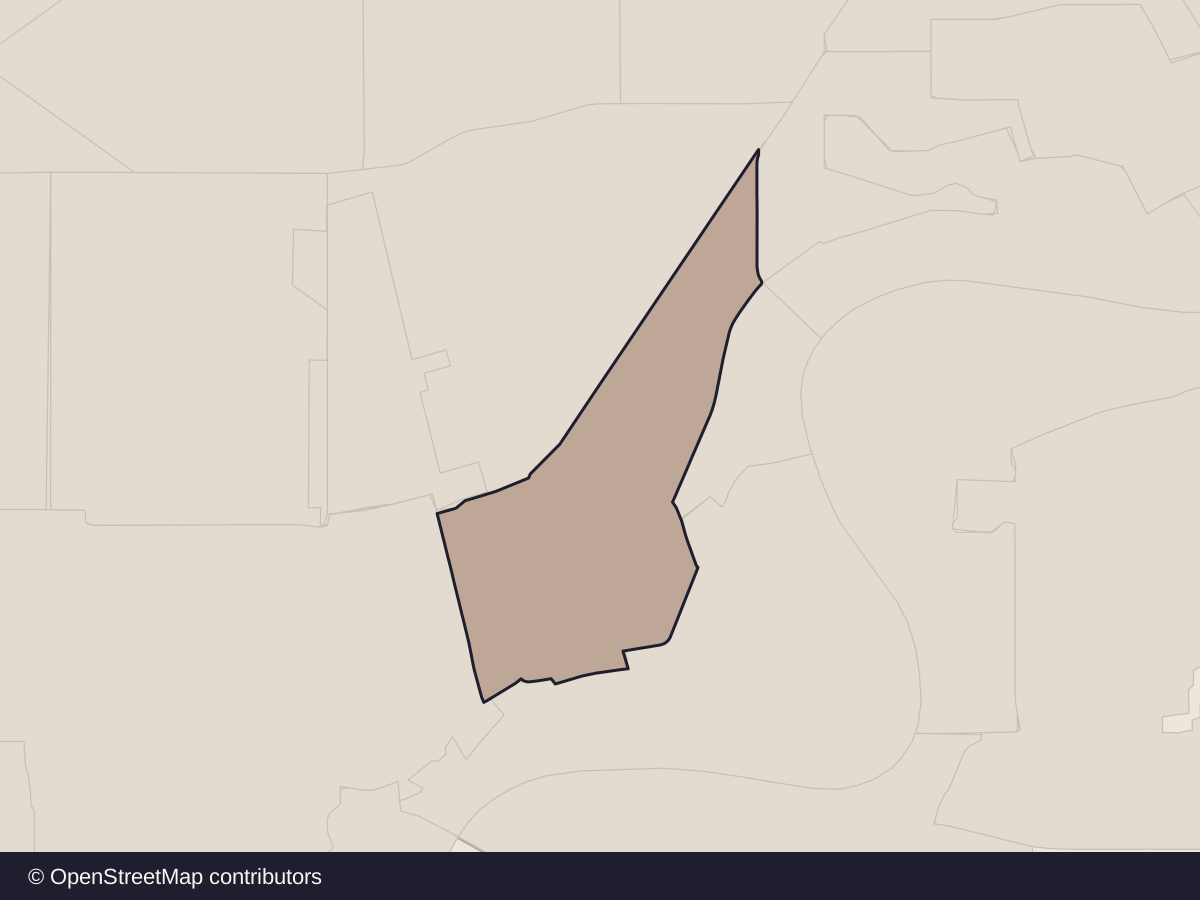
Located north of Downtown and east of 97 Street, Boyle Street runs along the 118 Avenue commercial corridor and shares geography with the Chinatown district. The neighbourhood has long been characterized by a concentration of social services alongside long-term residents, newcomers, and community advocates working to build stability in an area that has faced significant challenges. Recent years have brought growing investment interest, with buyers attracted by the historic character of older housing stock and the neighbourhood's central location.
Older single-family homes, low-rise apartments, and newer infill make up the residential fabric. Prices are among the most accessible in the inner city, drawing investors and first-time buyers willing to take a longer-term view. Community organizations like Boyle Street Community Services provide institutional backbone, and the active community league is a consistent voice in neighbourhood planning.
For buyers, Boyle Street requires context and a clear-eyed view of the neighbourhood's trajectory — it is a community in transition, not yet arrived, but with a location and character that reward patience. For sellers, an increasingly informed buyer pool drawn by inner-city land values and central position is expanding the potential market for well-maintained properties.
John Carle works with buyers and sellers in Boyle Street through Homes & Gardens Real Estate Limited. Active asking prices on this page come from the MLS® feed. Sold-market statistics for Edmonton are published by the Realtors Association of Edmonton.
More neighbourhoods in Central Edmonton